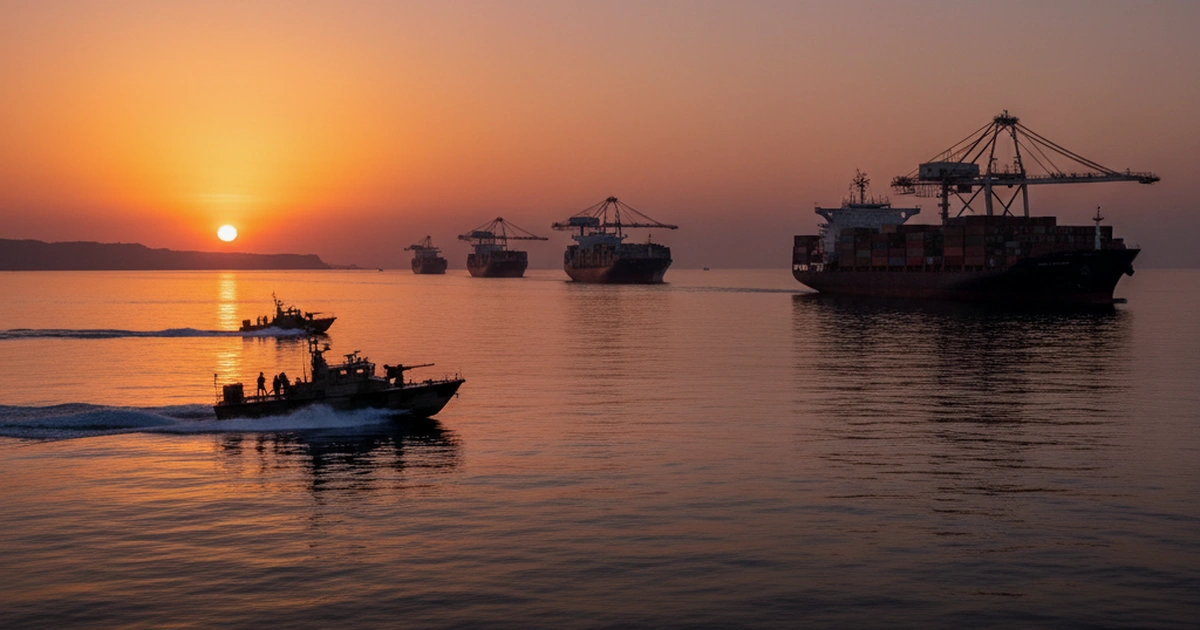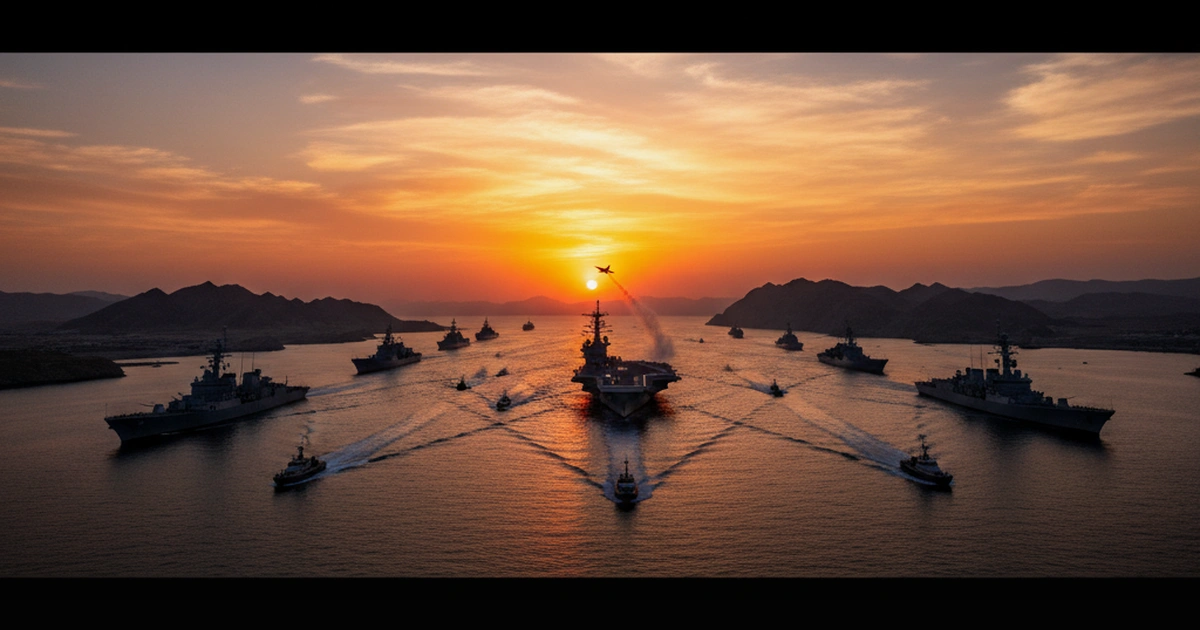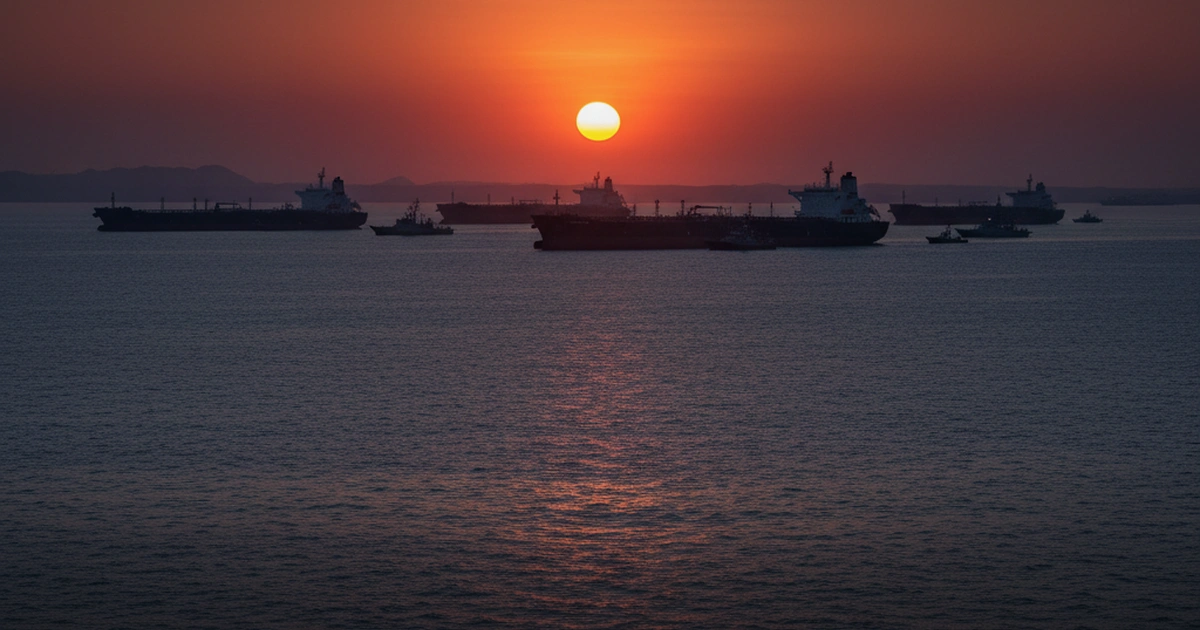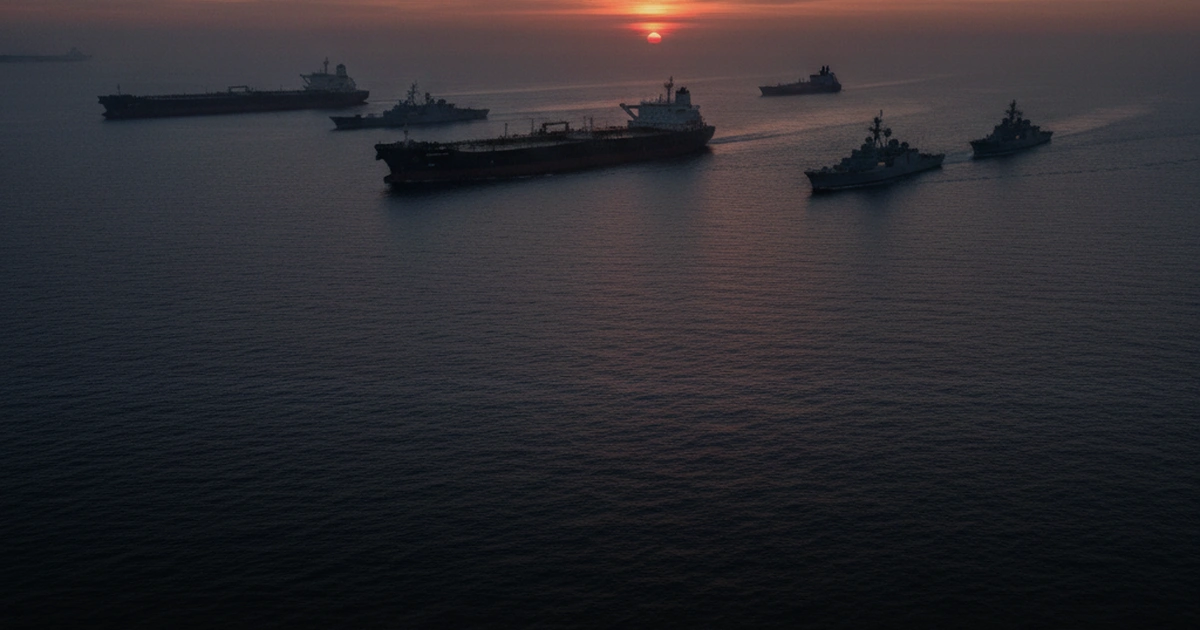
4 Naval Powers Now Circle the Strait of Hormuz as Oil Hits $119
- France deploys its only aircraft carrier to escort ships through Hormuz once combat ends
- China sends escort fleet while reportedly negotiating safe passage deals with Iran
- Tanker traffic through Hormuz drops 90% as insurance coverage collapses entirely
- Four permanent UN Security Council members now have warships in the same 21-mile chokepoint
Ten days into the Iran war, the Strait of Hormuz has become the most militarized waterway on Earth. France announced it will deploy the Charles de Gaulle carrier strike group to escort commercial shipping. China bolstered its naval presence with a three-ship escort fleet. Russia joined Iran for live-fire naval exercises inside the strait itself.
The trigger was a single drone. On March 2, a Shahed drone struck the RAF base at Akrotiri, Cyprus. French President Emmanuel Macron, already in Cyprus for summit talks, declared: “When Cyprus is attacked, then Europe is attacked.” One week later, Europe was deploying warships.
The strait carries 20% of global oil. Brent crude crossed $119 per barrel as 10 vessels were attacked in the first week alone. Lloyd’s of London suspended war-risk coverage entirely. Without insurance, supertankers cannot legally sail under most flag regulations.
Four of the five permanent UN Security Council members now have naval assets in a 21-mile chokepoint. Here’s what each power is actually deploying.
1. France Pulls Its Only Carrier From NATO
France made the most dramatic move. Macron announced the Charles de Gaulle nuclear carrier strike group would be retasked from NATO Mission Lafayette 26 in the Baltic Sea and redirected to the Persian Gulf.
The Charles de Gaulle is France’s only aircraft carrier. The strike group includes 20 Rafale fighter jets, 2 E-2C Hawkeye airborne radar aircraft, and 8 frigates from France, Greece, Italy, Netherlands, and Spain. Two Mistral amphibious carriers complete the package.
Macron’s stated mission is “purely defensive, purely escort” to reopen Hormuz to commercial traffic after combat ends. But France explicitly called US-Israeli strikes “an outbreak of war conducted outside international law.” This is not France joining the US war. It’s France running an independent operation.
The NATO question looms large. France is pulling its carrier from a NATO mission to run a non-NATO, non-US operation. Germany refused to commit naval assets. The EU is fragmenting in real time.
2. China Deploys Escort Fleet With Iran Back-Channel
The People’s Liberation Army Navy 48th escort fleet departed Djibouti before Macron’s announcement. Three vessels: Type 052DL destroyer “Tangshan,” Type 054A frigate “Daqing,” and replenishment ship “Taihu.”
China’s stated mission is protecting Chinese-flagged shipping and Chinese-crewed vessels transiting Hormuz. But the real story is the back-channel. Bloomberg reports China is conducting negotiations with Iranian naval commanders for guaranteed safe passage.
Vessels identified as “Chinese” or flagged by Muslim-majority nations are reportedly being waved through Iranian maritime checkpoints without boarding. China negotiates safe passage for its ships while officially supporting Iran at the UN Security Council.
The signal is unmistakable. Russia, China, and Iran are conducting “Maritime Security Belt 2026” exercises with live-fire drills inside the Strait of Hormuz during an active war. China says it is neutral. Its navy is drilling with the country the US is fighting.
3. US Navy Convoy Escorts and Federal Insurance
Trump announced the US Navy will provide convoy escort to qualifying commercial vessels. The Biden-era Federal Ship Financing Program has been partially activated to provide government-backed war-risk insurance for US-flag and partner-nation vessels.
The insurance piece is critical. Lloyd’s of London and the Joint War Committee designated the Persian Gulf, Gulf of Oman, and Red Sea as war-risk zones. Most major marine insurers suspended war-risk coverage for Hormuz transits entirely.
Without war-risk insurance, a supertanker cannot legally sail under most flag-state regulations. The US government is essentially becoming the insurer of last resort for global oil transit.
The precedent is Operation Earnest Will from 1987-88. During the Iran-Iraq Tanker War, the US reflagged 11 Kuwaiti tankers under US colors and provided Navy escort. France ran a parallel operation called “Operation Prométhée.” The combination of reflagging and escort proved tankers could move safely when protected.
4. The Economics of a Closed Chokepoint
The numbers explain why four naval powers are converging on a 21-mile strait. Hormuz carries 20% of global oil supply. Since the war began, tanker traffic dropped 90%. Seven crew members have been killed in attacks.
The only viable bypass is the Hormuz bypass pipeline in Saudi Arabia. It has a capacity of 6.5 million barrels per day against normal Hormuz flow of 21 million barrels per day. There is no logistical substitute for this strait.
The insurance collapse may be more decisive than the military balance. If no insurer will cover a tanker, no captain will sail it, even with a Navy escort. European allies stress they didn’t join Iran strikes, but they cannot ignore a closed Hormuz.
What worked in 1987 was the reflagging and escort combination. What is different in 2026: China was not present in 1987. There is no historical template for managing a US-France-China naval triangle in the same chokepoint. The insurance market collapse is more severe. Iran is engaged in full-scale war with the US, not a proxy tanker campaign.
Four permanent UN Security Council members are now physically present in Hormuz. The US is fighting a war. France is deploying for escort. China and Russia are drilling with the country the US is at war with. The strait cannot stay closed. None of those navies are leaving.