USS Spruance Fires on Iranian Ship as Pentagon Claims ‘Blockade’ Authority
- USS Spruance disabled the Iranian cargo ship M/V Touska on April 19 after firing into its engine room during a six-hour standoff in the Arabian Sea
- CENTCOM officially claims it is enforcing “naval blockade measures” against Iranian ports, turning around 25 commercial vessels since the operation began
- International maritime law experts say blockades require formal declaration and notification to neutral states, conditions not clearly met by U.S. operations
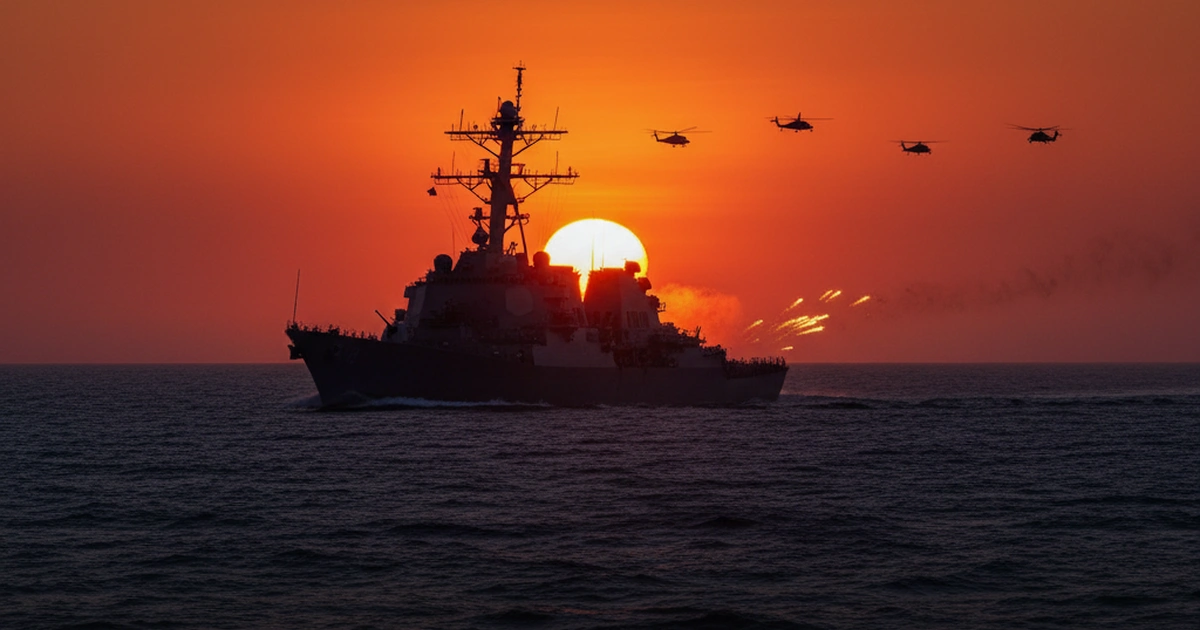
The U.S. Navy fired on an Iranian cargo ship in the Arabian Sea after a six-hour standoff, marking the first time American forces have disabled a merchant vessel while claiming blockade enforcement authority. The guided-missile destroyer USS Spruance intercepted the Iranian-flagged M/V Touska as it headed toward Bandar Abbas at 17 knots, according to CENTCOM.
The incident raises immediate questions about the legal status of what CENTCOM calls “naval blockade measures.” Reuters independently confirmed that U.S. forces fired on the vessel and released video of Marines boarding it. The ship remains in U.S. custody.
The Six-Hour Standoff
USS Spruance intercepted M/V Touska in the north Arabian Sea on April 19, according to the official CENTCOM release. The destroyer warned the Iranian vessel for six hours before firing several rounds from its 5-inch Mk 45 gun into the ship’s engine room to disable propulsion.
Marines from the 31st Marine Expeditionary Unit then boarded the vessel. Social media posts from CENTCOM indicate the Marines launched from the USS Tripoli helicopter element.
The targeted ship, TOUSKA (IMO 9328900), is a 2008-built container ship flagged to Iran. U.S. Treasury records show the vessel has been under sanctions since 2020, tied to the Islamic Republic of Iran Shipping Lines (IRISL).
CENTCOM claims 25 commercial vessels have been turned around or directed back to Iranian ports since the blockade began. The timeline for when enforcement operations started was not specified.
The Legal Question
The Pentagon’s use of “naval blockade measures” puts it on contested legal ground. International maritime law requires that “a blockade shall be declared and notified to all belligerents and neutral States,” according to the San Remo Manual summarized by the International Committee of the Red Cross.
Maritime law experts note that blockades are recognized tools of naval warfare but only under specific conditions: formal declaration, demonstrated effectiveness, and limits protecting civilian populations and neutral shipping.
The U.S. has not issued a formal blockade declaration through diplomatic channels. CENTCOM’s public statements represent the first official acknowledgment of what it terms enforcement operations, but fall short of the notification requirements typically expected under international law.
This creates a gap between operational reality and legal framework. The U.S. is asserting blockade authority while avoiding the formal declarations that would trigger broader international legal obligations and potential neutral-state objections.
What’s at Stake
The Touska interdiction tests whether the U.S. can enforce de facto blockade measures without meeting classical legal requirements. Twenty-five commercial vessels represents significant commercial disruption if the CENTCOM figures are accurate.
The operational precedent matters more than the legal terminology. If USS Spruance can disable Iranian-bound cargo ships with minimal international pushback, other naval powers may adopt similar “enforcement measures” without formal blockade declarations.
Iran has not yet responded to the specific interdiction. The vessel remains in U.S. custody with no announced timeline for crew repatriation or cargo disposition.