Five Paths to Global War in 2026
- The Doomsday Clock sits at 85 seconds to midnight, the closest to global catastrophe since the Clock’s creation in 1947.
- Global conflict deaths reached 240,000 in 2025, marking the highest annual toll since World War II.
- Five escalation pathways dominate intelligence assessments: Taiwan Strait crisis, Iran nuclear breakout, NATO-Russia miscalculation, Middle East regional war, and North Korea provocations.
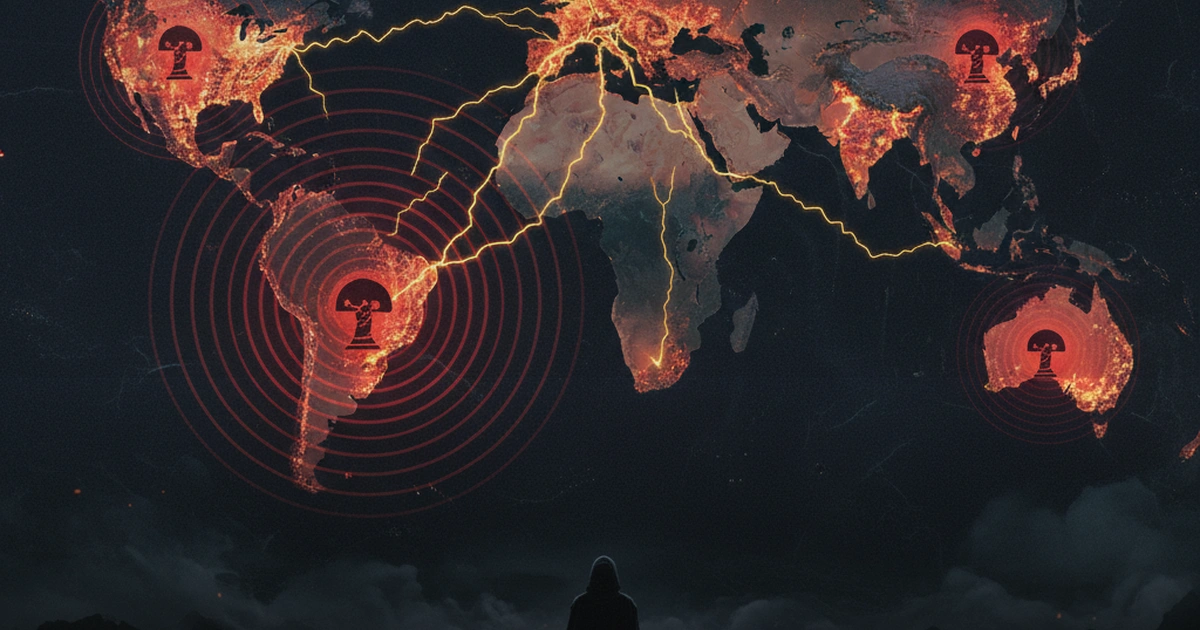
The world sits closer to global war than at any point since the Cuban Missile Crisis. The Bulletin of Atomic Scientists moved their Doomsday Clock to 85 seconds to midnight in January 2026. They cite multiple dangers from nuclear weapons, climate change, and emerging technologies.
The DNI’s 2025 Annual Threat Assessment identifies flashpoints where local conflicts could spiral into global war within months. Eurasia Group’s Top Risks 2026 report warns that traditional deterrence mechanisms fail as authoritarian powers challenge the post-1945 international order.
Here stand the five most dangerous escalation pathways, ranked by probability and global impact.
5. North Korea’s Escalation Ladder
North Korea’s nuclear program reaches a new threshold of danger. The regime now possesses an estimated 50-60 nuclear warheads and demonstrated intercontinental delivery capability in 2025. Pyongyang maintains these weapons serve defensive purposes only. North Korea’s state media consistently describes its nuclear program as deterrence against “hostile US policy.”
The escalation risk comes from miscalculation, not strategy. Kim Jong Un’s regime views nuclear weapons as survival insurance. This makes them more likely to use tactical nuclear weapons in a limited conflict. A border skirmish with South Korea or accidental naval clash could trigger North Korean nuclear use, forcing immediate US retaliation.
The Global Peace Index 2025 ranks the Korean Peninsula among the world’s most militarized regions. Over 80,000 US troops sit within North Korean missile range. Beijing continues to call for dialogue rather than military escalation, according to Chinese officials.
4. NATO-Russia Direct Confrontation
The war in Ukraine creates multiple tripwires for NATO-Russia escalation. Russian forces regularly probe NATO airspace. NATO weapons systems now strike targets inside Russia. The RAND Corporation’s analysis identifies at least six scenarios where Article 5 could trigger accidentally.
Moscow disputes Western characterizations of its actions as aggressive. Russian officials consistently frame their operations as defensive responses to NATO expansion. The Kremlin argues that Western military aid to Ukraine constitutes direct involvement in the conflict.
The most dangerous scenario involves the Baltic states. Russian forces in Kaliningrad could cut off Estonia, Latvia, and Lithuania within 60 hours. NATO’s response requires crossing Russian territory or accepting the loss of three member states.
Putin threatens nuclear retaliation against any NATO intervention in what Russia considers its “sphere of influence.” With 6,000+ nuclear warheads in Russian inventory, even a 1% miscalculation probability creates existential risk.
3. Middle East Regional War
The Israel-Gaza conflict creates a powder keg across the Middle East. Iran’s proxy network spans from Lebanon to Yemen. Israel conducts preemptive strikes on Iranian nuclear facilities. The International Crisis Group lists the Middle East as the region most likely to experience state-on-state warfare in 2026.
Tehran rejects Western accusations of regional destabilization. Iranian officials characterize their support for regional allies as legitimate resistance to occupation. The Islamic Revolutionary Guard Corps maintains that its regional activities respond to Israeli and American aggression.
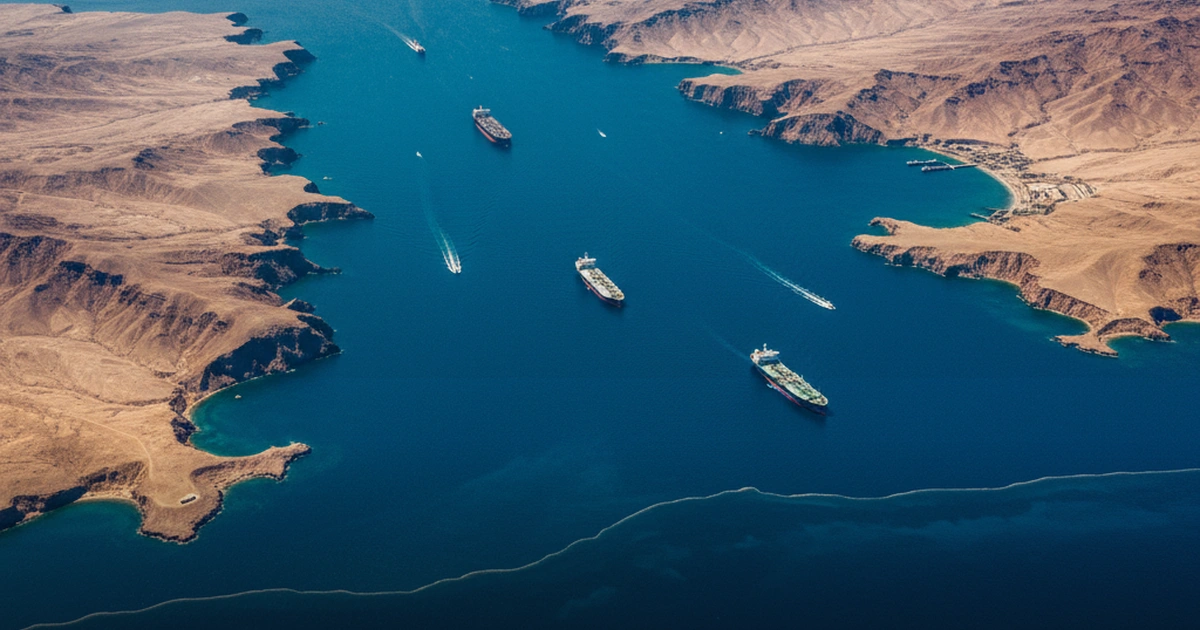
The escalation pathway runs through the Strait of Hormuz. If Iran closes the waterway in response to Israeli strikes, global oil prices spike above $200 per barrel within days. The US Fifth Fleet intervenes to reopen shipping lanes, bringing American and Iranian forces into direct combat.
CSIS analysis shows the US maintains 40,000 troops across the region, all within range of Iranian missiles.
2. Iran’s Nuclear Breakout
Iran sits closer to nuclear weapons capability than ever before. The ALMA research center reports that Iran accumulates enough 60% enriched uranium to produce 4-6 nuclear weapons within 3-4 weeks.
Iranian leadership disputes these timelines and maintains its nuclear program serves peaceful purposes. Tehran’s UN representative repeatedly states Iran has no intention of developing weapons, citing religious prohibitions against weapons of mass destruction.
The trigger point arrives when Israeli intelligence confirms Iran begins weaponization. Israel’s doctrine of preemption means airstrikes follow within days. Iran’s retaliation through Hezbollah, Hamas, and Houthi proxies forces US intervention to protect Israeli territory and regional shipping.
The New York Times reports that Iran’s leadership views nuclear weapons as the only guarantee against regime change. For Iran’s rulers, the nuclear program justifies any risk.
1. Taiwan Strait Crisis
China’s military buildup opposite Taiwan reaches critical mass. The CSIS Taiwan Program tracks over 300 Chinese military aircraft crossing the median line weekly. Satellite imagery shows amphibious assault ships concentrated in Fujian Province.
Beijing maintains these activities constitute routine training within Chinese territory. The Taiwan Affairs Office consistently describes cross-strait relations as an internal Chinese matter requiring no foreign interference. Chinese officials argue that Taiwan’s independence movements violate established agreements.
The escalation pathway runs straightforward: Taiwan declares independence or China decides reunification cannot wait. Chinese forces attempt to seize Taiwan within 72 hours before US reinforcements arrive. American treaty obligations under the Taiwan Relations Act trigger immediate military response.
The DNI assessment identifies 2026 as the highest-risk year for Chinese action against Taiwan. Xi Jinping faces domestic pressure to resolve Taiwan “once and for all” before the Communist Party’s 21st Congress in 2027.
Unlike other regional conflicts, a Taiwan Strait war immediately involves both nuclear superpowers. The US Seventh Fleet operates 50 miles from Chinese territory. Chinese anti-ship missiles reach Guam and Japan. First-strike calculations compress decision timelines to hours, not days.
The Caveat
These rankings assume rational decision-making by state leaders. They do not account for cyber warfare that could blind early warning systems, domestic political crises that force leaders into desperate gambits, or terrorist attacks using stolen nuclear materials.
The highest probability remains what intelligence agencies call “unintended escalation from localized conflict.” None of these wars start as global conflicts. They become global conflicts when nuclear powers miscalculate the other side’s red lines.