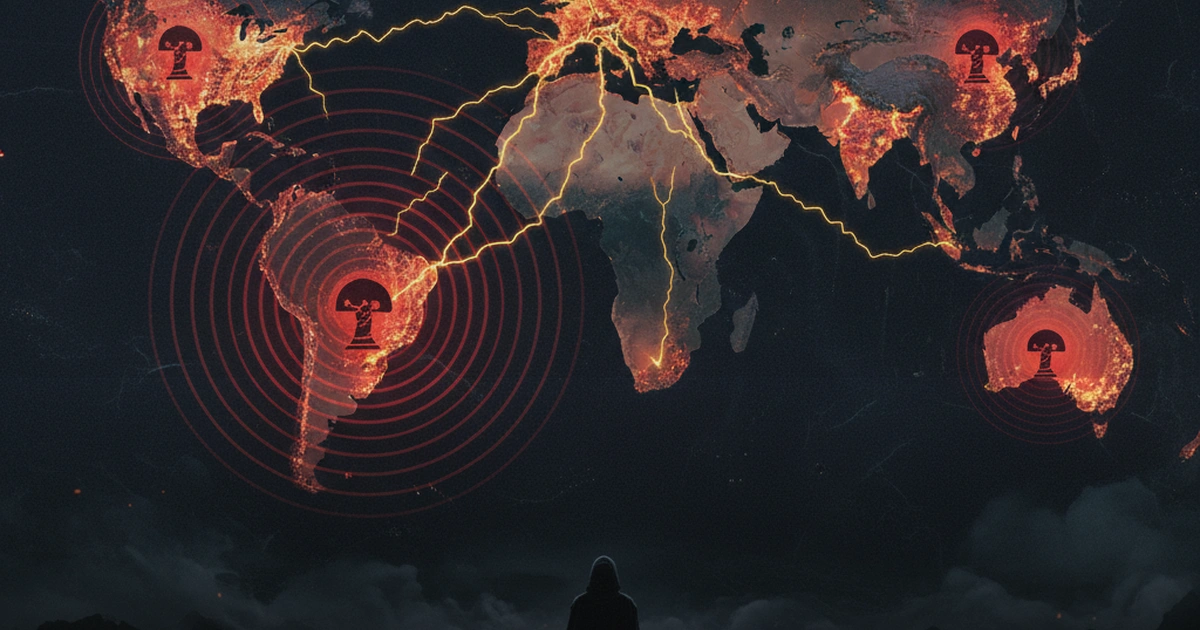
- Iceland remains the world’s most peaceful nation in the 2025 Global Peace Index.
- Neutrality policies in countries like Switzerland and New Zealand provide diplomatic distance, not immunity.
- Survival in global conflict depends on food self-sufficiency and geographic isolation from major nuclear target zones.
The Limitations of Peace Metrics
The Global Peace Index measures domestic stability and low engagement in active conflict. It ranks nations based on metrics like homicide rates, military expenditure, and political stability Vision of Humanity. Iceland currently holds the top position. Understanding the geography of a nation remains critical when evaluating these rankings.
So why isn’t this a reliable guide for total war? The index tracks current peacefulness, not future vulnerability. A country can be peaceful while maintaining an economy that relies entirely on global supply chains. If the global system collapses, those chains vanish. Ireland and Austria rank highly for peace but lack the food security or geographic isolation required to sustain a population during a total breakdown of international trade. Some analysts argue that peace indices overemphasize internal social order while ignoring the external dependencies that define modern state survival. The sources reviewed for this piece do not include a direct rebuttal from the authors of the Global Peace Index regarding these specific survival critiques.
Geographic Isolation and Resource Security
Geography serves as a primary filter for survivability. The Southern Hemisphere offers distinct advantages regarding nuclear fallout patterns compared to the Northern Hemisphere. Countries like Argentina provide significant agricultural capacity, which is essential when global food distribution stops FAO.
Consider the math of modern survival. A nation with high peace rankings but zero domestic food production is more vulnerable than a less peaceful nation with high caloric self-sufficiency. New Zealand is often cited for its distance from major power centers and its history of nuclear-free policies. Yet, distance alone does not account for the secondary impacts of a global nuclear event, such as atmospheric changes or the global economic shock Bulletin of Atomic Scientists. While some experts prioritize geographic distance, others contend that global economic integration makes total isolation impossible for any modern state.
The Illusion of Neutrality
Neutrality is a political declaration, not a physical barrier. During the World Wars, neutral nations like Switzerland still faced extreme resource scarcity, trade blockades, and refugee pressure. The 2025 Global Peace Index map shows a world that is fundamentally more interconnected than it was in 1945.
We must look past the rankings to understand the risks. Nuclear threat assessments and fallout modeling provide a clearer picture of immediate danger than peace indexes. No country is immune to the cascading effects of a global conflict. Peace is a status, but survival is a function of resources, location, and the brutal reality of a globalized world. None of those variables are static. All of them are at risk.