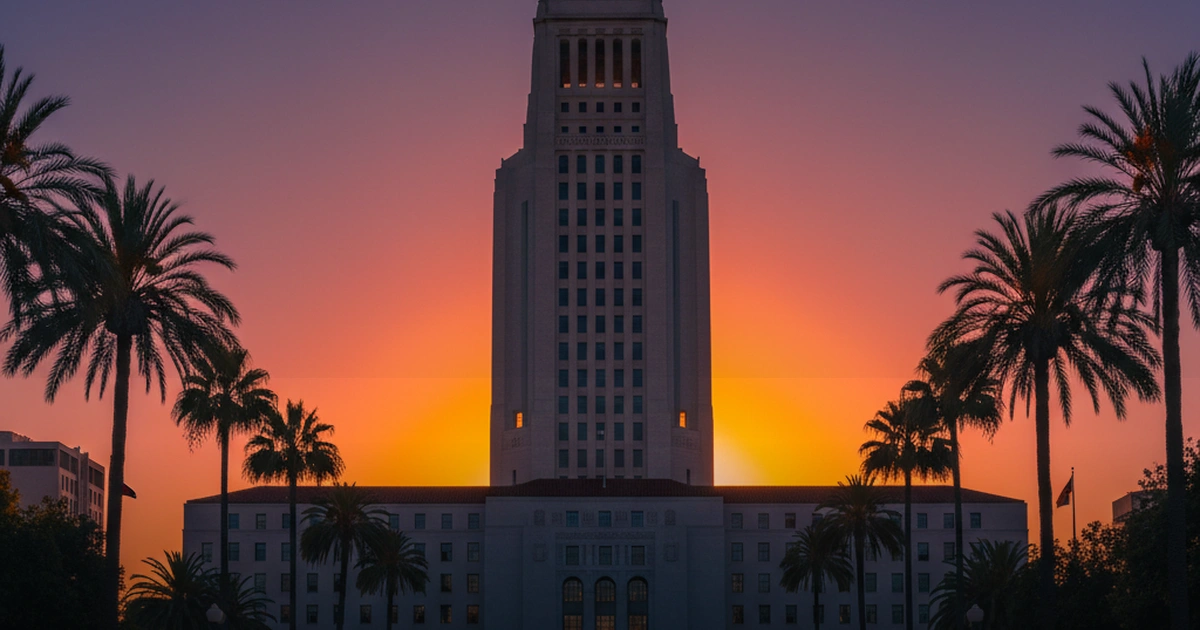
- The 2026 primary election is scheduled for June 2, with a potential runoff on November 3.
- Roughly 14 candidates have filed to run, but mainstream media coverage focuses on five major contenders.
- The race serves as the first major referendum on incumbent Mayor Karen Bass since her inauguration.
Fourteen people are running for mayor of Los Angeles in 2026. Only five candidates represent distinct governing models that could reshape the city.
The Candidate Field
-
Karen Bass: As the incumbent mayor, Bass anchors the mainstream Democratic coalition. Her campaign emphasizes continuity. She seeks to leverage her record on housing production and homelessness reduction to secure a second term.
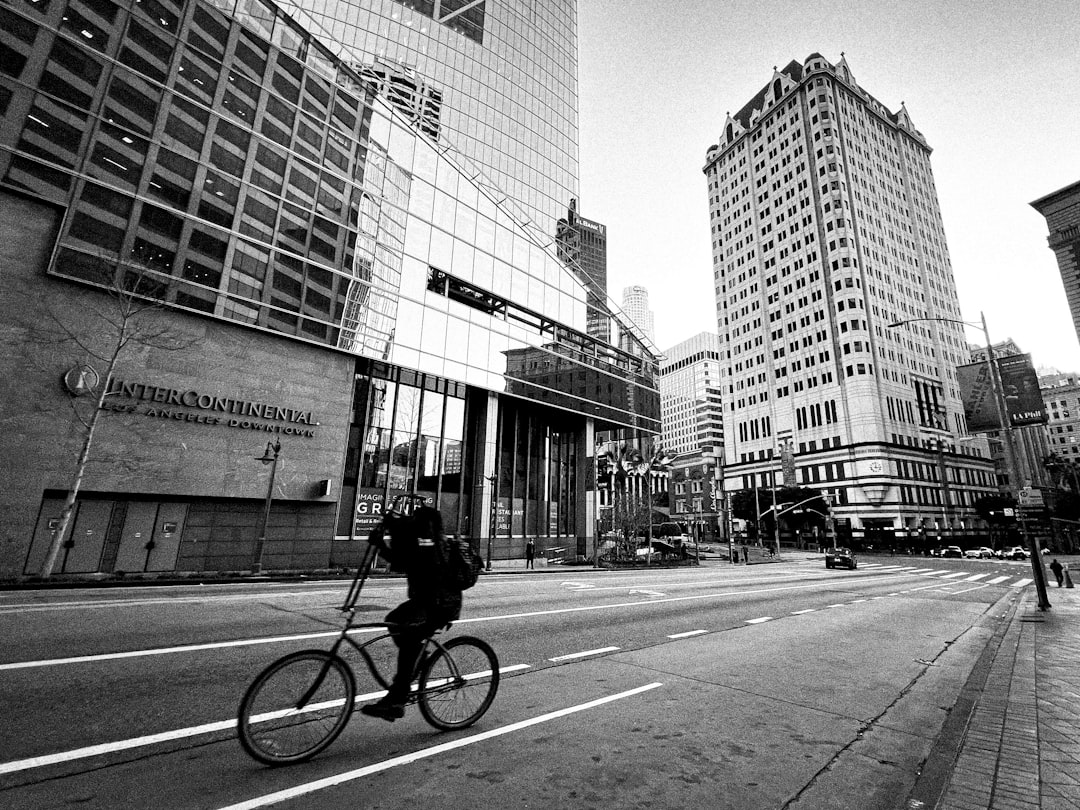
A cyclist navigates a downtown street, reflecting the urban landscape that remains the central focus for all mayoral candidates. · Photo by John Tracey on Unsplash -
Nithya Raman: Representing a shift toward progressive reform, the City Councilmember pitches herself as an alternative from within the system. Her platform prioritizes structural accountability, renter protections, and operational competence in city services.
-
Rae Huang: Positioned in the movement-left lane, Huang advocates for social housing and community-led governance. Her campaign focuses on anti-displacement policies and a care-first approach to public safety.
-
Adam Miller: An entrepreneur and nonprofit executive, Miller offers a technocratic, business-friendly model of government. He frames his candidacy around restoring efficiency to City Hall and prioritizing economic stability.
-
Spencer Pratt: Running as an outsider, Pratt utilizes a populist critique of the status quo. His campaign centers on frustration with current leadership and demands for radical disruption of the municipal machine.
Five Theories of Governance
The race is often simplified as a battle between an incumbent and a challenger. This framing obscures the reality that voters choose between five distinct theories of how to manage a $13 billion annual budget. These models represent specific ideological commitments to municipal administration.

- Bass believes in coalition management and incremental progress. Her model relies on existing institutional partnerships to scale current programs.
- Raman argues the system requires internal reform to function for tenants and small businesses. She prioritizes data-driven policy shifts over traditional political deal-making.
- Huang suggests the city requires a structural pivot toward social goods and away from market-driven models. Her platform centers on social housing, anti-displacement protections, and a care-first model of public safety.
- Miller posits that the city is a failing firm that needs a manager to fix operations. His pitch is execution, accountability, and restoring faith in City Hall.
- Pratt asserts that the current establishment cannot fix what it built and runs on outsider critique. His campaign centers on public frustration with city leadership and a demand for disruption.
These models dictate how each candidate approaches the city’s three most pressing fault lines: housing, homelessness, and public safety. On public safety, the contrast is sharp. Bass focuses on police staffing. Huang advocates for prevention-first models. Miller prioritizes operational reliability. Raman seeks to balance infrastructure basics with emergency response reform.
The 2026 Stakes
Los Angeles is currently navigating a significant affordability squeeze and a decline in film and television production jobs. The city’s polling averages remain fluid as the June primary approaches. No candidate has secured a clear path to victory.
Voters must decide if the current coalition can deliver, or if the city requires a shift toward reform, movement politics, technocratic management, or total disruption. The ballot in June effectively asks one question: which of these five theories will define Los Angeles for the next four years?