- Saudi Aramco reported a 25% rise in net profit to roughly $32.5 billion for Q1 2026.
- Adjusted net income rose 26% to $33.6 billion, beating market expectations.
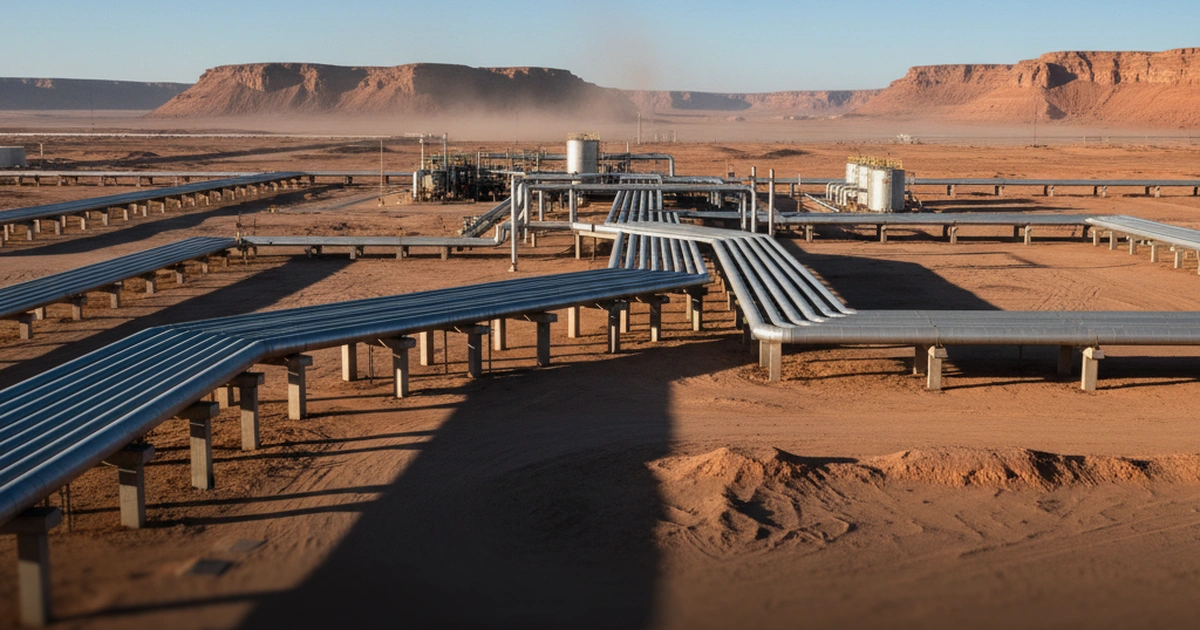
- The East-West Pipeline hit its maximum capacity of 7.0 million barrels per day during the quarter.
Saudi Aramco’s latest earnings report offers a textbook example of how a strong headline can obscure a narrowing structural reality.
The Earnings Illusion
The market viewed Aramco’s 26% profit jump as evidence of regional resilience.

Investors interpreted the results as a sign that Saudi infrastructure could weather the ongoing conflict and the closure of the Strait of Hormuz. Energy ETFs rose on the news, and equity multiples for regional oil producers compressed less than many analysts anticipated.
The report confirmed that higher sales of crude, refined products, and chemicals drove the financial performance. It also confirmed that the East-West Pipeline mitigated the impact of the Hormuz disruption.
The Math of the Bypass
The pipeline’s success is also its primary limitation.

CEO Amin Nasser confirmed that the East-West Pipeline reached its maximum capacity of 7.0 million barrels per day during the first quarter. This system supplies roughly 2 million barrels per day to domestic refineries, leaving 5 million barrels per day available for export via the Red Sea.
This is not a lever to be pulled during further volatility. It is a fixed ceiling.
Consider the total available slack in the system. The EIA estimates that Saudi Arabia and the UAE combined have roughly 2.6 million barrels per day of spare bypass capacity. This represents the total emergency buffer available if the Strait of Hormuz remains closed.
Under normal conditions, roughly one-fifth of global oil consumption passes through the strait. The vast majority of that volume lacks practical alternatives. When you compare a 2.6 million barrel per day buffer against the typical flow of over 20 million barrels per day, the system lacks the elasticity the market currently assumes.
The Valuation Gap
The market is pricing in a fast normalization that does not align with the technical reality.
Current sentiment suggests the conflict is a price-constrained problem that will resolve as markets adjust. However, Aramco’s own disclosures describe a capacity-constrained problem. You cannot pay your way out of a pipeline that is already running at 100% utilization.
Viral claims regarding specific 2027 normalization dates or barrel thresholds remain unsupported by primary filings. These figures represent social media extrapolation rather than corporate guidance.
The gap between the headline earnings beat and the hard pipeline constraint is the real story. The system has already burned its slack. Good luck getting more.