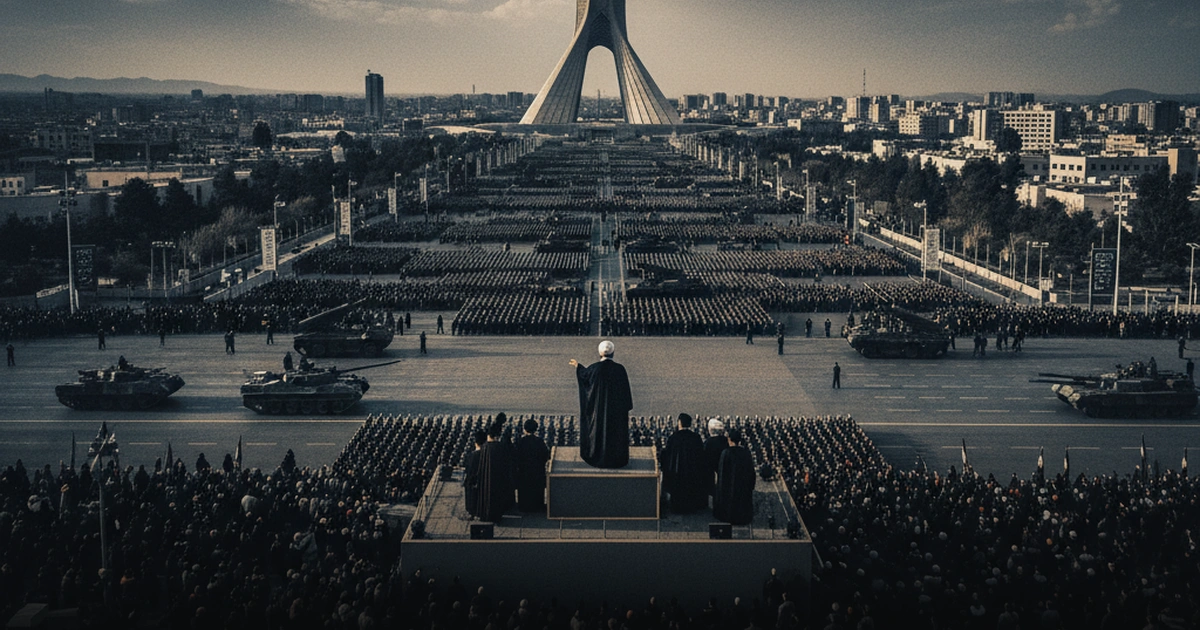
Article 5 Isn’t Automatic: The NATO Tripwire That Might Not Trip
- NATO’s Article 5 requires only “such action as it deems necessary”—not automatic military response
- The alliance invoked Article 5 once after September 11, 2001
- Current tensions with Russia expose Article 5’s deliberative gaps
NATO’s Article 5 creates an obligation to respond, not automatic war.
The North Atlantic Treaty’s Article 5 states that an attack on one member will trigger assistance “by taking forthwith, individually and in concert with the other Parties, such action as it deems necessary, including the use of armed force.”
The key phrase: “such action as it deems necessary.” Each NATO member decides what action it considers appropriate. The treaty creates an obligation to respond but leaves the response to national discretion.
This gap between perception and reality could determine whether the next crisis escalates to global war.
Legal Text vs. Public Belief
NATO’s collective defense clause preserves national sovereignty over war decisions. The 1949 drafters included “such action as it deems necessary” to avoid automatic military obligations that would bypass constitutional war powers, analysis by the Congressional Research Service confirms.
Article 6 defines the geographic scope: attacks on member territory in Europe or North America, member forces in the Mediterranean or North Atlantic, or member islands north of the Tropic of Cancer.
The treaty “does not require any specific response” and “preserves the constitutional prerogatives of member governments,” the Congressional Research Service notes. The U.S. Congress retains its constitutional authority to declare war, even if Article 5 is invoked.
The European Parliament’s 2022 analysis emphasizes that Article 5 creates “an obligation of result, not of means.” Members must respond but can choose how.
Public polling shows majorities in NATO countries believe Article 5 guarantees immediate military support. The legal text guarantees consultation and assistance.
Russian Exploitation Strategy
Russian officials view NATO’s Article 5 discretion as evidence the alliance lacks unity. Deputy Foreign Minister Alexander Grushko told TASS in January 2026 that “NATO’s Article 5 is nothing but political theater designed to intimidate Russia while preserving each member’s right to avoid actual military commitment.”
Moscow’s strategy exploits this deliberative gap. Russian doctrine calls for limited territorial seizures designed to fall below NATO’s consensus threshold for major military response, European intelligence assessments conclude. Russian International Affairs Council analysis argues that Article 5’s deliberative nature makes it “fundamentally unreliable as a deterrent” because “democratic consultation takes weeks while military operations require hours.”
Adversaries who study the treaty understand its flexibility better than publics who assume it means automatic war.
The 9/11 Precedent
NATO invoked Article 5 once: September 12, 2001, after attacks on the World Trade Center and Pentagon.
The alliance’s response included intelligence sharing, enhanced maritime patrols, airspace monitoring, and logistical support for U.S. operations. Several allies contributed combat forces to Afghanistan as national decisions, not automatic Article 5 obligations.
The invocation triggered “extensive consultation” and “a range of non-military support measures,” NATO’s official history documents. The process took weeks to implement fully.
“Each ally decided what it could and would contribute to the common effort,” the State Department’s archive notes.
The precedent cuts both ways: Article 5 can produce meaningful collective action without automatic war, but the process takes time that might not exist in a fast-moving crisis.
The Baltic Test Case
NATO’s Enhanced Forward Presence stations multinational battlegroups in Estonia, Latvia, Lithuania, and Poland. The deployment deliberately includes troops from major NATO powers to ensure any Russian attack hits multiple alliance members simultaneously.
“A limited Russian incursion into Baltic territory, designed to test alliance resolve, could create a scenario where the scale of attack doesn’t obviously warrant full-scale war, but clearly violates Article 5,” the Belfer Center’s 2025 analysis notes.
Specific scenarios include Russian forces seizing a small Baltic island and claiming historical territory, or Russian-backed separatists declaring independence in eastern Estonia, European security researchers map.
“An adversary could calibrate an attack to fall below the threshold where allies feel compelled to respond with major force, while still achieving territorial or political objectives,” analysis by the Center for European Policy Analysis warns.
Trump’s Conditional Commitment
President Trump’s return adds uncertainty to Article 5’s discretionary framework. Trump said U.S. commitment to mutual defense “depends on your definition” and linked Article 5 obligations to defense spending levels, in June 2025.
Recent polling shows declining European confidence in U.S. alliance commitments. European security officials describe Trump as undermining deterrence through NATO skepticism.
NATO agreed to raise defense spending to 5% by 2035 to address Trump’s complaints, the Atlantic Council notes, but Trump continues questioning U.S. obligations regardless of spending levels.
“If allies doubt American resolve, adversaries will doubt it too,” Brookings Institution analysis warns.
Trump could invoke Article 5’s “such action as it deems necessary” language to limit U.S. response to non-military support, following the post-9/11 precedent.
Deterrence Through Ambiguity
Article 5’s deliberative nature creates competing pressures. Flexibility preserves alliance unity by avoiding automatic wars. But flexibility signals to adversaries that NATO response isn’t guaranteed.
NATO’s 2022 Strategic Concept acknowledges this tension: “Deterrence is based on an appropriate mix of nuclear and conventional capabilities” but “the circumstances in which NATO might have to use nuclear weapons are extremely remote.”
The alliance maintains ambiguity about response thresholds deliberately. Too specific, and adversaries can calibrate attacks below the trigger level. Too vague, and allies might not respond when needed.
RAND Corporation research suggests the current Baltic deployment makes Article 5 invocation more likely by ensuring any Russian attack kills NATO troops from multiple countries. But killing allied troops doesn’t automatically produce war declarations.
Article 5 requires consensus among 32 democracies to respond to an attack. Consensus takes time. Time might not exist.
The Real Guarantee
NATO’s founding document guarantees consultation, assistance, and some form of response to attacks on member territory. It does not guarantee immediate military action or uniform responses across the alliance.
Article 5 is “an obligation to consult and assist, not an automatic trigger for war,” the Brennan Center’s legal analysis concludes.
The September 11 precedent shows what Article 5 produces: intelligence cooperation, logistics support, diplomatic solidarity, and individual national contributions that vary by country and capacity. Whether that framework can deter great power aggression remains the alliance’s central test.