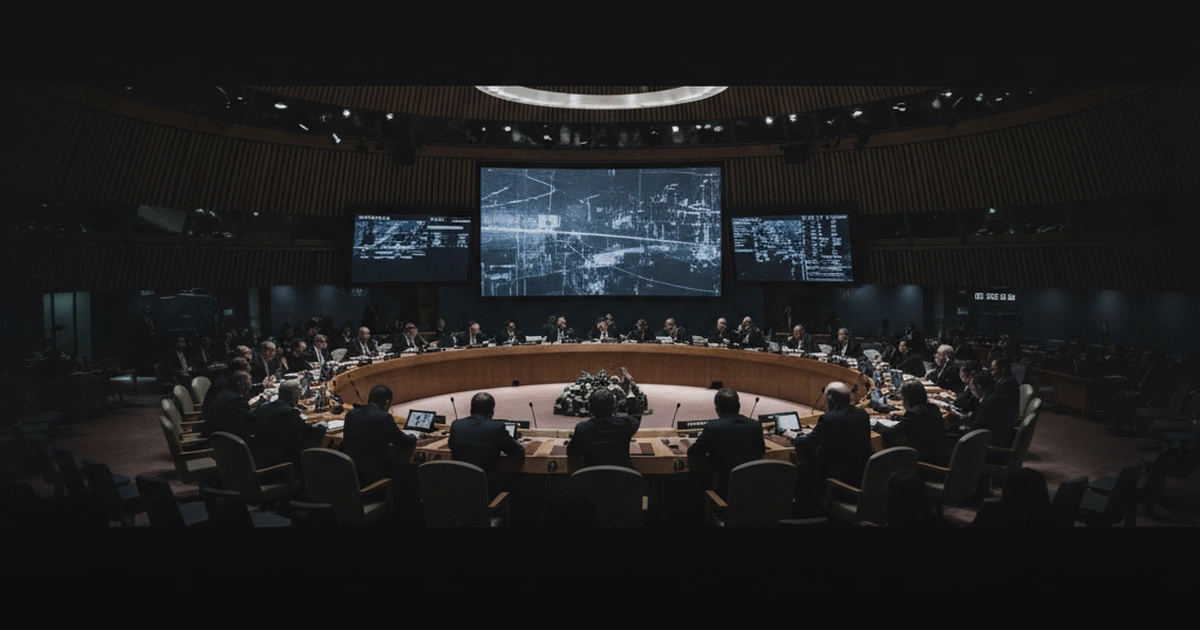
China’s Taiwan Invasion Timeline: The $4 Trillion Semiconductor War
- CSIS wargaming shows China could achieve air superiority over Taiwan in 3-5 days through coordinated missile strikes and air campaigns.
- Taiwan produces 90% of the world’s advanced semiconductors through TSMC, worth $4 trillion annually to global tech supply chains.
- US intervention would cost 2 carrier strike groups and 900+ aircraft according to CSIS projections, while Taiwan’s semiconductor fabs face destruction regardless of military outcome.
The People’s Liberation Army could control Taiwan’s airspace within a week. That timeline comes from CSIS wargaming that modeled 24 invasion scenarios using current Chinese capabilities.
The wargames reveal a strategic paradox. China’s military can seize Taiwan faster than ever before. But destroying the island’s semiconductor industry in the process would trigger the largest economic collapse in modern history.
Every scenario ends with the same result: the global tech industry goes dark.
The PLA’s 72-Hour Window
CSIS’s “First Battle of the Next War” study modeled Chinese invasion capabilities across multiple scenarios. The timeline is consistent.
Day 1: Coordinated missile strikes on Taiwan’s air bases, radar sites, and naval facilities. The PLA launches 1,000+ ballistic missiles in the first 24 hours, targeting Taiwan’s 26 major military installations.
Day 2-3: Chinese air forces establish air superiority over the Taiwan Strait. Taiwan’s air force loses 60-80% of its fighter aircraft in the opening phase.
Day 4-5: Amphibious assault begins with 100,000+ PLA troops crossing the strait under air cover.
The Pentagon’s 2025 China Military Power report confirms the PLA’s amphibious capacity has tripled since 2020. China now operates 8 Type 075 landing helicopter docks and 3 Type 071 landing platform docks, with 6 more under construction.
The speed matters because it compresses decision time for US intervention. RAND’s Military Scorecard analysis shows China’s anti-access capabilities now extend 1,000 miles from its coast. US forces would face immediate losses upon entering the conflict zone.
Beijing’s Counter-Narrative
Chinese officials reject invasion timelines as Western fear-mongering. The Taiwan Affairs Office consistently describes military exercises as “routine annual training” designed to “safeguard national sovereignty,” according to statements published by Xinhua News Agency.
Beijing’s white papers characterize reunification as inevitable but emphasize peaceful means. General Li Shangfu, former Defense Minister, told the Shangri-La Dialogue in 2023 that China “will strive for peaceful reunification with the greatest sincerity,” while warning that “no one can stop China’s reunification.”
The Chinese narrative frames US military assessments as deliberately provocative. Foreign Ministry spokesperson Wang Wenbin called CSIS wargaming exercises “purely hypothetical scenarios designed to justify increased American military presence in the Pacific.”
Taiwan’s Ministry of National Defense offers a third perspective. Defense Minister Chiu Kuo-cheng told legislators in January 2026 that Taiwan’s defensive capabilities have “significantly improved” through indigenous missile programs and US weapons sales under the Taiwan Relations Act.
The TSMC Paradox
Taiwan Semiconductor Manufacturing Company produces 92% of the world’s most advanced chips and 54% of all semiconductors globally, according to CSIS analysis. The company’s annual revenue exceeds $70 billion, but its strategic value is measured in trillions.
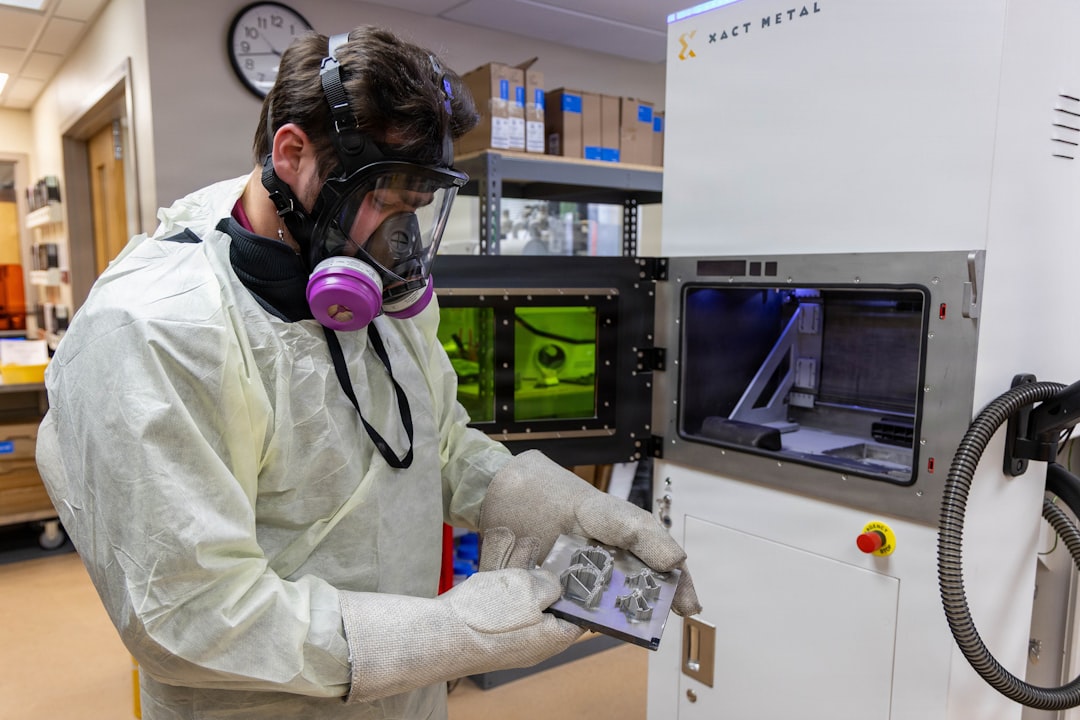
Every iPhone, Tesla, and data center depends on TSMC chips. MIT Technology Review reported that TSMC’s advanced fabrication plants cannot be replicated elsewhere in less than 5-7 years, even with unlimited funding.
Here’s the contradiction embedded in every invasion scenario: China needs Taiwan’s semiconductor capacity intact, but military action guarantees its destruction.
TSMC’s fabrication plants are located in Hsinchu and Taichung, directly in the path of any amphibious assault. The facilities require constant power, ultra-pure water, and contamination-free environments. CSIS wargaming assumes that military operations would render the facilities inoperable within 48 hours, regardless of targeting intentions.
The economic math is stark. Global semiconductor shortage in 2021 cost the auto industry $210 billion in lost production. Complete loss of TSMC capacity would multiply that impact across every tech sector simultaneously.
Beijing’s State Council has acknowledged this contradiction. Chinese officials privately admit that military action would destroy the very assets that make Taiwan strategically valuable. The South China Morning Post reported that internal Chinese assessments estimate $2 trillion in losses to China’s own tech sector from TSMC disruption.
Strategic Ambiguity’s Price Tag
The United States maintains no formal defense treaty with Taiwan. The Taiwan Relations Act of 1979 commits the US to provide defensive weapons but stops short of guaranteed military intervention.
That ambiguity carries a measurable cost in American blood and treasure.
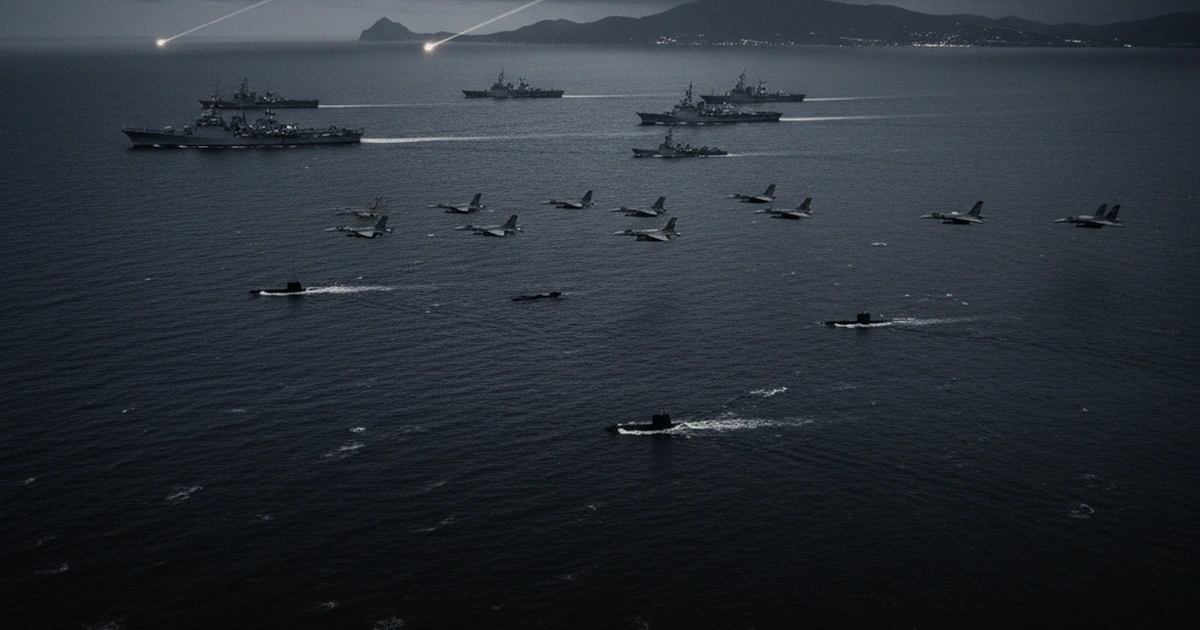
CSIS wargaming projects US losses at 2 aircraft carriers, 10-20 destroyers and cruisers, 200-400 combat aircraft, and 3,000+ military personnel in the first three weeks of conflict. The financial cost exceeds $100 billion in destroyed equipment before counting broader economic impacts.
The 1995-96 Taiwan Strait Crisis offers historical precedent for US intervention. President Clinton deployed two carrier battle groups to deter Chinese military exercises near Taiwan. The deployment worked, but the strategic context has fundamentally changed.
In 1996, China’s military budget was $12 billion. SIPRI data shows China’s 2024 defense spending reached $296 billion, making it the second-largest military spender globally. The PLA has transformed from a regional force into a peer competitor with global reach.
The carrier groups that deterred China in 1996 would face immediate targeting by DF-21D and DF-26 anti-ship ballistic missiles today. Pentagon assessments confirm China’s “carrier killer” missiles can strike targets 1,500+ kilometers from Chinese territory.
The Simultaneous Crisis Problem
Every Taiwan invasion scenario assumes the conflict occurs in isolation. That assumption may be wrong.
CFR’s Preventive Priorities Survey ranks a Taiwan crisis as the highest-probability major conflict for 2026. But it also identifies ongoing Middle East tensions, Russia-NATO escalation risks, and North Korean provocations as concurrent threats.
China’s strategic calculation changes if the United States is already engaged in high-intensity conflict elsewhere. A two-front war would strain American military resources beyond current capacity.
The 2024 Pentagon China report notes Beijing’s emphasis on “strategic opportunity periods” when adversaries face internal constraints or external distractions. The timing of any Taiwan operation would likely exploit American vulnerabilities.
RAND analysis warns that US nuclear doctrine may be the only constraint on Chinese timing. The prospect of nuclear escalation remains the ultimate deterrent, but it requires credible threats that political leaders may be unwilling to make.
The $4 Trillion Question
The highest-probability outcome is not military victory or defeat. It’s economic catastrophe.
McKinsey Global Institute modeling estimates that complete disruption of Taiwan’s semiconductor exports would cost the global economy $4 trillion annually. That figure exceeds the GDP of Germany.
The disruption would cascade through every technology-dependent sector: automotive, telecommunications, consumer electronics, data centers, and artificial intelligence. Companies maintain semiconductor inventory measured in weeks, not months. Production lines would halt within 30 days of supply interruption.
China would suffer equally. Despite domestic semiconductor development, Chinese tech giants remain dependent on TSMC for advanced chips. Council on Foreign Relations analysis shows Chinese companies account for 23% of TSMC’s revenue.
The military can game invasion scenarios. No one has modeled recovery from complete semiconductor supply chain collapse.
That may be the real deterrent. Not American carrier groups or nuclear weapons, but the mutual economic destruction that follows any military solution. China can take Taiwan in a week. Neither side can survive what comes next.