The Spy Who Broke Iran: Commander’s Seven Escapes Fuel Mossad Asset Claims
- Iran’s Quds Force Commander Esmail Qaani survived seven targeted strikes in 18 months, including escaping minutes before attacks that killed Khamenei and other top officials
- Three narratives compete: Qaani defected to Israel as a Mossad asset, was executed by Iran for espionage, or is victim of disinformation
- Trump demanded Iran’s “unconditional surrender” on Day 7 as Russia began providing targeting intelligence to Iran against U.S. forces
Seven times the bombs fell. Seven times Esmail Qaani walked away.
The commander of Iran’s elite Quds Force has survived more assassination attempts than any intelligence officer in modern history. His pattern of miraculous escapes has sparked the most explosive espionage allegation of the war: that Iran’s top external operations chief was working for Israel all along.
On March 1, Qaani left Supreme Leader Khamenei’s residence minutes before U.S. and Israeli strikes killed the Ayatollah and dozens of senior IRGC commanders. It was his seventh escape in 18 months.
Now three competing narratives battle for credibility. Pro-Israel accounts claim Qaani is “confirmed safe in Israel” after years as a Mossad asset. Arabic media reports Iran executed him for espionage after a failed interrogation. Iranian officials deny everything, calling it Zionist propaganda.
The truth may determine whether Israel achieved the greatest intelligence penetration since the Cold War or Iran eliminated its most dangerous internal threat.
The Seven Escapes
Qaani’s survival record reads like fiction. The National’s investigation documented a pattern that defies probability.
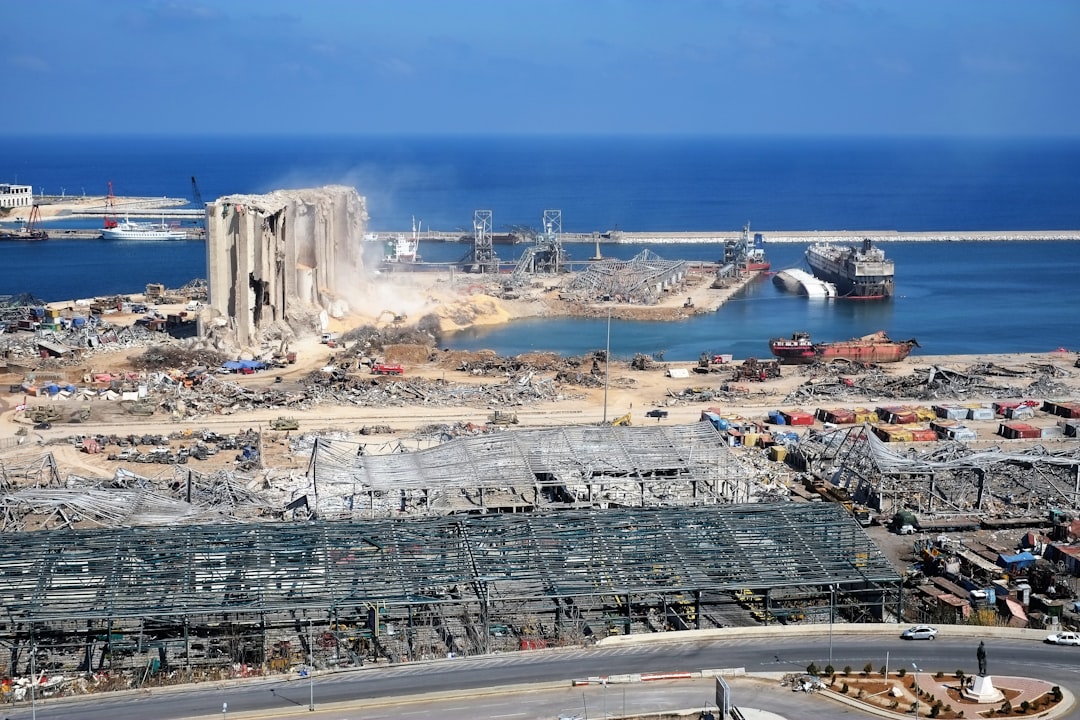
September 27, 2024: Israel bombs the Beirut bunker where Hezbollah chief Hassan Nasrallah is meeting with IRGC officers. Qaani was scheduled to attend but “apologized and withdrew minutes before entering”. Nasrallah and Brigadier General Abbas Nilforoushan die. Qaani survives.
Early October 2024: Israeli strikes target Hashem Safieddine, Nasrallah’s successor, in Dahieh. Qaani was reportedly in the area but disappears for days before resurfacing in Tehran. Safieddine is killed.
June 2025: During Operation “Roar of the Lion,” multiple outlets declare Qaani dead after Israeli strikes. He appears at a public celebration in Tehran days later, very much alive.
March 1, 2026: Joint U.S.-Israeli strikes eliminate Khamenei and the IRGC’s senior command structure. Iranian media reports Qaani “left the Supreme Leader’s residence minutes before the attack.”
At what point does luck become intelligence? The mathematical probability of surviving seven targeted operations approaches zero. Either Qaani possesses supernatural intuition or someone was feeding him information.
Three Competing Narratives
The first narrative emerged within hours of Qaani’s latest escape. Pro-Israel social media accounts claimed the commander had defected to Israel after years as a Mossad asset. Dr. Eli David’s viral post declared Qaani “confirmed safe in Israel” and thanked him for intelligence that led to the elimination of Hamas leader Haniyeh, Hezbollah’s Nasrallah, and ultimately Khamenei himself.

The defection story serves Israeli psychological warfare. If Iran’s external operations chief was working for the enemy, every IRGC officer becomes suspect. Trust collapses. Paranoia spreads.
The second narrative contradicts the first entirely. Arabic media outlets, including ProtoThema and Times of Islamabad, report Iran detained Qaani on March 2. Under interrogation about his repeated escapes, he allegedly suffered heart attack symptoms and was subsequently executed for espionage.
Unverified video circulating March 5 purportedly shows Qaani shooting himself during detention. The footage cannot be authenticated.
The execution narrative serves Iran’s enemies differently. It suggests the regime is so paranoid it’s killing its own commanders. Internal collapse becomes the story.
The third narrative denies everything. Iran’s state media claims Qaani “remains active in his duties” but provides no verified public appearances since March 1. Even a Mossad-linked satirical account denied Qaani was their spy, though the Jerusalem Post noted this hardly constitutes official confirmation.
Each story serves someone’s interest. None can be independently verified. The commander who survived seven assassination attempts has vanished into the fog of war and espionage.
Unconditional Surrender
As the Qaani allegations swirled, President Trump escalated his demands. “There will be no deal with Iran except UNCONDITIONAL SURRENDER!” he posted on Truth Social March 6.
Trump added a promise wrapped in threat: “After that, and the selection of a GREAT & ACCEPTABLE Leader(s), we will work tirelessly to bring Iran back from the brink of destruction, making it economically bigger, better, and stronger than ever before. IRAN WILL HAVE A GREAT FUTURE. ‘MAKE IRAN GREAT AGAIN (MIGA!)’”
White House Press Secretary Karoline Leavitt clarified that unconditional surrender occurs when the president “determines that Iran no longer poses a threat to the United States of America.”
Unconditional surrender is the language of total war. It was demanded of Japan in 1945 and Germany in 1945. Both countries were occupied, their governments dissolved, their constitutions rewritten.
What does it mean when applied to a nation of 88 million whose military is being destroyed but whose government has not formally collapsed?
Fifty Israeli fighter jets answered by dropping approximately 100 bombs on Khamenei’s underground bunker in Tehran, still being used by surviving regime officials. The message was clear: surrender or face annihilation.
Russia Feeds the Fire
As Trump demanded capitulation, Russia entered the intelligence war on Iran’s side. The Washington Post reported exclusively that Moscow is providing Tehran with targeting intelligence about U.S. forces, including satellite imagery of American ships, aircraft, and troop positions.
One official described it as “a pretty comprehensive effort” to help Iran target U.S. military assets. Russian satellite data could dramatically improve Iranian missile and drone accuracy against American forces.
Iran has fired hundreds of missiles at U.S. bases since March 1. Russian intelligence sharing transforms scattered harassment into precision targeting. Six U.S. service members have been killed since the war began.
Does intelligence sharing constitute an act of war? How does Washington respond to a nuclear-armed adversary feeding targeting data to the enemy?
The proxy conflict has spawned its own proxy conflict. Russia provides intelligence. America provides bombs. Iran provides targets.
The War Spreads
Day 7 brought the conflict to non-combatant Gulf states. Iran fired missiles at the Israeli embassy in Bahrain. Bahrain intercepted 78 missiles and 143 drones. Saudi Arabia shot down a cruise missile and three drones near Riyadh.
The IDF claims 2,500 strikes and 80% destruction of Iran’s air defense network. Iranian media reports 1,332 killed since the war began.
Twenty thousand Americans have evacuated the Middle East. The State Department is arranging charter flights and C-17 cargo planes for the half million Americans still in the region. Closed airspace complicates evacuations.
Two assessments compete. The campaign is succeeding beyond expectations: Iran’s military shattered, leadership decapitated, most senior commander possibly working for the enemy all along. Or the war is metastasizing beyond control: Russia feeding targeting data, unconditional surrender demanded, Gulf states under attack, half a million Americans trapped.
The commander who survived seven assassination attempts holds the answer. Whether Esmail Qaani was Israel’s greatest asset or Iran’s most hunted spy, his disappearance marks either the war’s most stunning intelligence victory or its most dangerous escalation.
The bombs keep falling. The commander stays gone.